Buy geekmall.eu ?
We are moving the project
geekmall.eu .
Are you interested in purchasing the domain
geekmall.eu ?
domain@kv-gmbh.de · 0541-91531010
Buy geekmall.eu ?
What is the meaning of digital PWM (Pulse Width Modulation)?
Digital PWM (Pulse Width Modulation) is a method used to control the amount of power delivered to a device by rapidly switching it on and off. The width of the on-time (duty cycle) determines the average power delivered to the device. In the digital context, PWM is achieved using digital signals and is commonly used in microcontrollers and digital signal processors to control the speed of motors, brightness of LEDs, and other applications requiring variable power control. This method allows for precise and efficient control of power delivery in digital systems. **
What is the project Pulse Width Modulation?
Pulse Width Modulation (PWM) is a technique used to encode a message into a pulsing signal. It involves varying the width of the pulse while keeping the frequency constant. This method is commonly used in electronic devices to control the power supplied to electrical devices, such as motors, LEDs, and speakers. By adjusting the duty cycle of the pulse, PWM allows for precise control over the output voltage or current, making it an efficient way to regulate the speed or intensity of various components. **

Similar search terms for PWM Pulse Width Modulation
Top-Angebote
Products related to PWM Pulse Width Modulation:
-
Arctic P9 PWM PST CO (Black) - 92 mm PWM Fan with Cable Splitter for Continuous OperationARCTIC’s versatile assortment of Fans is both quiet and powerful. We have the right options for any application or need, in sizes from 80 to 140 mm. Plus, our Fans are equipped with state-of-the-art engine technology, innovative fan blades and high-quality bearings, making them particularly durable and efficient.12,99 £*Shipping: 0,00 £Secure redirect to the provider
-
be quiet! Light Wings 140mm PWM high-speed ARGB LED Lighting 4-pin PWM PC FanIMPRESSIVE LIGHTING Lots of illumination possibilities Light Wings 140mm PWM high-speed offers ARGB lighting at the front and rear. The subtly lit ring at the back combined with the bright one at the front make for a magnificent appearance from every angle. 20 ARGB LEDs give you many opportunities to individualize your PC build. FOR RADIATORS AND HEATSINKS Fan blades optimized for high pressure With a remarkably high air pressure of up to 2.3mm/H2O, Light Wings 140mm PWM high-speed is37,49 £*Shipping: 0,00 £Secure redirect to the provider
-
be quiet! Silent Wings Pro 4 120mm PWM 6-Pole Fan Motor Technology 4-pin PWM PC FanDescription The be quiet! Silent Wings Pro 4 120mm PWM is a high performance cooling fan designed for demanding desktop PC builds. It combines powerful airflow with advanced noise reduction technology, making it suitable for use as a case fan or for cooling radiators and CPU heatsinks. The fan can reach speeds of up to 3000 RPM and delivers airflow of up to 83.9 CFM with static pressure of up to 5.31 mmH2O. A convenient three position speed switch allows you to select medium speed, high speed or ultra high speed depending on the cooling requirements of your system. Its 6 pole motor uses a three phase design to reduce vibration and power consumption, while the Fluid Dynamic Bearing provides smooth operation and a rated lifespan of up to 300000 hours. The reduced clearance between the fan blades and frame helps maximise air pressure for demanding cooling applications. Three different mounting options are included, allowing the fan to be installed in a PC case, radiator or heatsink. The 4 pin PWM connection enables automatic fan speed control through a compatible motherboard or fan controller.36,49 £*Shipping: 0,00 £Secure redirect to the provider
-
be quiet! Silent Wings Pro 4 140mm PWM 6-Pole Fan Motor Technology 4-pin PWM PC FanThe be quiet! Silent Wings Pro 4 140mm PWM fan is engineered for strong cooling performance with an emphasis on low noise. Its 6-pole motor keeps operation quiet without compromising airflow, making it suitable for gaming PCs and professional workstations alike. The 4-pin PWM connection lets a compatible motherboard or fan controller adjust the fan speed automatically. The fan measures 140 x 140 x 25mm and is backed by a 5-year warranty.40,49 £*Shipping: 0,00 £Secure redirect to the provider


-
How can pulse width modulation be explained simply?
Pulse width modulation (PWM) is a method used to control the amount of power delivered to a load by varying the width of the pulse signal. In simple terms, PWM works by turning the power on and off at a fast rate, with the ratio of on-time to off-time determining the average power delivered. By adjusting this ratio, PWM can effectively control the speed of motors, brightness of LEDs, and other parameters in electronic systems. **
-
What are the advantages of speed control in a direct current motor with pulse width modulation?
Speed control in a direct current motor with pulse width modulation (PWM) offers several advantages. Firstly, PWM allows for precise and accurate control of motor speed, enabling the motor to operate at different speeds as required by the application. Secondly, PWM control is energy-efficient as it regulates the amount of power delivered to the motor, resulting in reduced energy consumption and cost savings. Lastly, PWM control helps in reducing motor wear and tear by minimizing sudden changes in speed, leading to improved motor longevity and reliability. **
-
What is the difference between frequency modulation and amplitude modulation?
Frequency modulation (FM) and amplitude modulation (AM) are two different methods used in radio broadcasting to carry a signal. The main difference between the two is how they vary the carrier wave to transmit information. In AM, the amplitude of the carrier wave is varied in proportion to that of the input signal, while in FM, the frequency of the carrier wave is varied. FM is known for its better sound quality and resistance to noise, while AM is simpler and has a longer range. **
-
What is the difference between amplitude modulation and frequency modulation?
Amplitude modulation (AM) is a method of encoding information on a carrier wave by varying its amplitude, while frequency modulation (FM) encodes information by varying the frequency of the carrier wave. In AM, the amplitude of the carrier wave is directly proportional to the amplitude of the input signal, whereas in FM, the frequency of the carrier wave is varied in proportion to the amplitude of the input signal. FM is less susceptible to noise and interference compared to AM, making it a more reliable method for transmitting information over long distances. **


How does modulation work?
Modulation is the process of varying a carrier signal's properties, such as its amplitude, frequency, or phase, in order to encode information onto it. This allows the carrier signal to carry the information over a communication channel. For example, in amplitude modulation (AM), the amplitude of the carrier signal is varied in accordance with the information signal. At the receiving end, the modulation is reversed through demodulation, allowing the original information to be recovered. Modulation is a fundamental concept in communication systems, allowing for the transmission of information over long distances. **
Why use a reduction gear instead of PWM?
Reduction gears are used in mechanical systems to reduce the speed of a motor while increasing its torque, making them ideal for applications that require high torque at low speeds, such as in robotics, vehicles, and industrial machinery. On the other hand, Pulse Width Modulation (PWM) is a technique used to control the speed of a motor by varying the duty cycle of the input voltage. While PWM can control the speed of a motor, it does not provide the same level of torque multiplication as reduction gears. Therefore, reduction gears are preferred in applications where high torque at low speeds is necessary, while PWM is more suitable for applications that require precise speed control without the need for significant torque multiplication. **
Top-Angebote
Products related to PWM Pulse Width Modulation:
-
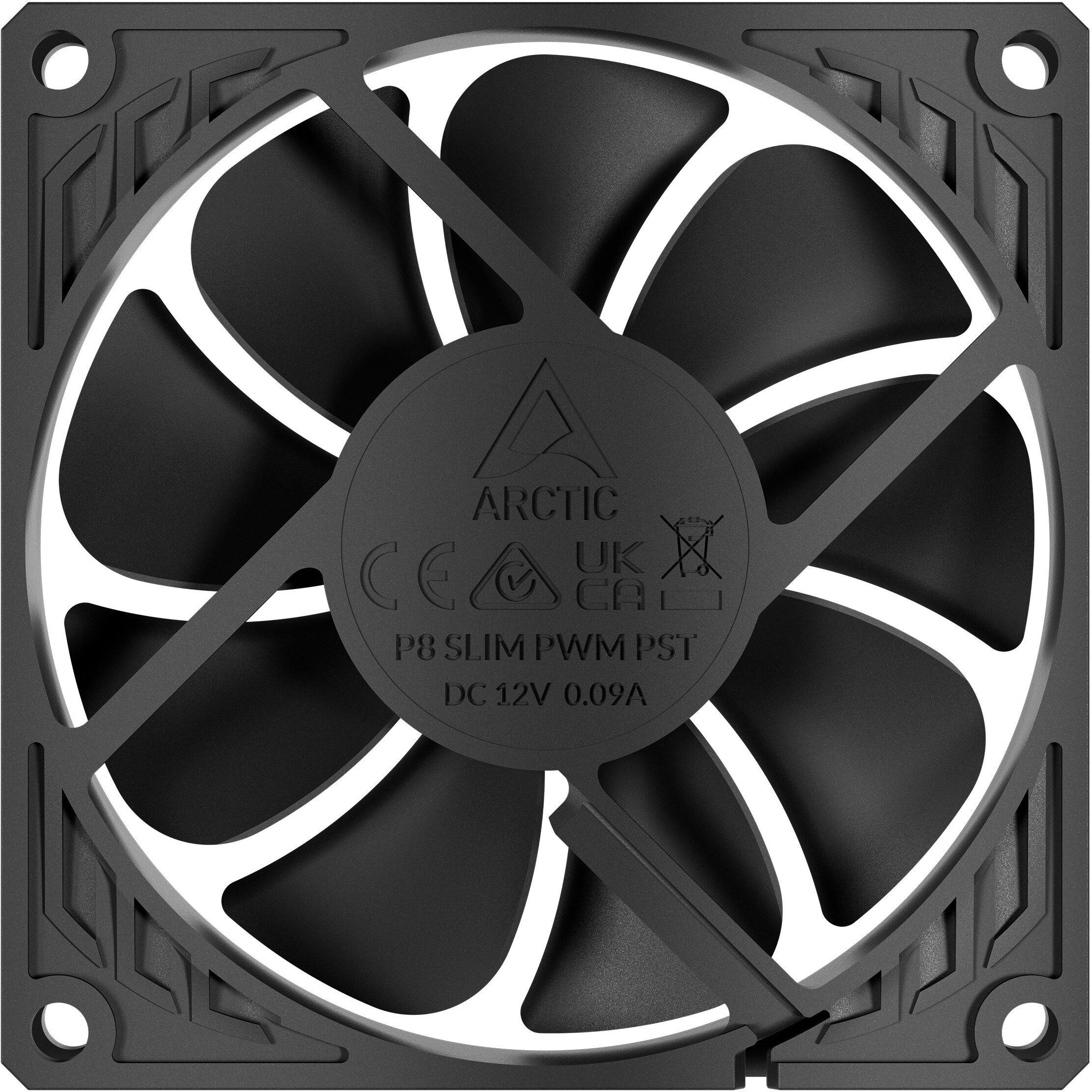
Arctic P8 Slim PWM PST 80mm Low-Profile PWM Fan with Cable Splitter - BlackAs experts in cooling, ARCTIC has the coolest solutions for every PC problem. We offer a comprehensive range of CPU coolers, case fans, thermal interfaces, and accessories, all with an excellent price-performance ratio. Year after year, ARCTIC products set new standards in noise minimization and performance.10,99 £*Shipping: 0,00 £Secure redirect to the provider
-
Arctic P8 PWM PST CO - Pressure-optimised 80 mm Fan with PWM PST for Continuous OperationNot only that we at ARCTIC free the IT world from noise – we care for the right sound as well!As an international company, our expertise extends over noise reduction in PCs to consumer electronics products.12,99 £*Shipping: 0,00 £Secure redirect to the provider
-
Arctic P9 PWM PST CO (Black) - 92 mm PWM Fan with Cable Splitter for Continuous OperationARCTIC’s versatile assortment of Fans is both quiet and powerful. We have the right options for any application or need, in sizes from 80 to 140 mm. Plus, our Fans are equipped with state-of-the-art engine technology, innovative fan blades and high-quality bearings, making them particularly durable and efficient.12,99 £*Shipping: 0,00 £Secure redirect to the provider
-
be quiet! Light Wings 140mm PWM high-speed ARGB LED Lighting 4-pin PWM PC FanIMPRESSIVE LIGHTING Lots of illumination possibilities Light Wings 140mm PWM high-speed offers ARGB lighting at the front and rear. The subtly lit ring at the back combined with the bright one at the front make for a magnificent appearance from every angle. 20 ARGB LEDs give you many opportunities to individualize your PC build. FOR RADIATORS AND HEATSINKS Fan blades optimized for high pressure With a remarkably high air pressure of up to 2.3mm/H2O, Light Wings 140mm PWM high-speed is37,49 £*Shipping: 0,00 £Secure redirect to the provider
-
What is the meaning of digital PWM (Pulse Width Modulation)?
Digital PWM (Pulse Width Modulation) is a method used to control the amount of power delivered to a device by rapidly switching it on and off. The width of the on-time (duty cycle) determines the average power delivered to the device. In the digital context, PWM is achieved using digital signals and is commonly used in microcontrollers and digital signal processors to control the speed of motors, brightness of LEDs, and other applications requiring variable power control. This method allows for precise and efficient control of power delivery in digital systems. **
-
What is the project Pulse Width Modulation?
Pulse Width Modulation (PWM) is a technique used to encode a message into a pulsing signal. It involves varying the width of the pulse while keeping the frequency constant. This method is commonly used in electronic devices to control the power supplied to electrical devices, such as motors, LEDs, and speakers. By adjusting the duty cycle of the pulse, PWM allows for precise control over the output voltage or current, making it an efficient way to regulate the speed or intensity of various components. **
-
How can pulse width modulation be explained simply?
Pulse width modulation (PWM) is a method used to control the amount of power delivered to a load by varying the width of the pulse signal. In simple terms, PWM works by turning the power on and off at a fast rate, with the ratio of on-time to off-time determining the average power delivered. By adjusting this ratio, PWM can effectively control the speed of motors, brightness of LEDs, and other parameters in electronic systems. **
-
What are the advantages of speed control in a direct current motor with pulse width modulation?
Speed control in a direct current motor with pulse width modulation (PWM) offers several advantages. Firstly, PWM allows for precise and accurate control of motor speed, enabling the motor to operate at different speeds as required by the application. Secondly, PWM control is energy-efficient as it regulates the amount of power delivered to the motor, resulting in reduced energy consumption and cost savings. Lastly, PWM control helps in reducing motor wear and tear by minimizing sudden changes in speed, leading to improved motor longevity and reliability. **
Similar search terms for PWM Pulse Width Modulation
-
be quiet! Silent Wings Pro 4 120mm PWM 6-Pole Fan Motor Technology 4-pin PWM PC FanDescription The be quiet! Silent Wings Pro 4 120mm PWM is a high performance cooling fan designed for demanding desktop PC builds. It combines powerful airflow with advanced noise reduction technology, making it suitable for use as a case fan or for cooling radiators and CPU heatsinks. The fan can reach speeds of up to 3000 RPM and delivers airflow of up to 83.9 CFM with static pressure of up to 5.31 mmH2O. A convenient three position speed switch allows you to select medium speed, high speed or ultra high speed depending on the cooling requirements of your system. Its 6 pole motor uses a three phase design to reduce vibration and power consumption, while the Fluid Dynamic Bearing provides smooth operation and a rated lifespan of up to 300000 hours. The reduced clearance between the fan blades and frame helps maximise air pressure for demanding cooling applications. Three different mounting options are included, allowing the fan to be installed in a PC case, radiator or heatsink. The 4 pin PWM connection enables automatic fan speed control through a compatible motherboard or fan controller.36,49 £*Shipping: 0,00 £Secure redirect to the provider
-
be quiet! Silent Wings Pro 4 140mm PWM 6-Pole Fan Motor Technology 4-pin PWM PC FanThe be quiet! Silent Wings Pro 4 140mm PWM fan is engineered for strong cooling performance with an emphasis on low noise. Its 6-pole motor keeps operation quiet without compromising airflow, making it suitable for gaming PCs and professional workstations alike. The 4-pin PWM connection lets a compatible motherboard or fan controller adjust the fan speed automatically. The fan measures 140 x 140 x 25mm and is backed by a 5-year warranty.40,49 £*Shipping: 0,00 £Secure redirect to the provider
-
Corsair RS120 PWM 120 mm Case FanDescription The CORSAIR RS120 PWM 120 mm Case Fan is a high-performance cooling fan designed to provide efficient airflow and quiet operation for gaming PCs, workstations, and custom desktop builds. Engineered with CORSAIR AirGuide technology, it concentrates airflow exactly where it's needed, making it ideal for both case ventilation and radiator cooling applications. Featuring PWM (Pulse Width Modulation) control, the RS120 automatically adjusts its speed between 420 and 2,100 RPM according to system temperatures, delivering the perfect balance between cooling performance and low noise. Support for Zero RPM Mode allows the fan to stop spinning completely during low-load operation, creating a virtually silent computing experience when maximum cooling isn't required. The fan uses a premium Magnetic Dome Bearing, reducing friction for quieter operation while improving durability and extending the fan's lifespan. Its daisy-chainable 4-pin PWM connectors simplify cable management by allowing multiple RS Series fans to connect together and operate from a single motherboard fan header, resulting in a cleaner and easier PC build. Whether you're upgrading an existing system or building a new PC, the CORSAIR RS120 offers reliable cooling, long-lasting performance, and efficient airflow for a wide range of applications.18,49 £*Shipping: 0,00 £Secure redirect to the provider
-
Arctic P14 Pro 140 mm PWM FanARCTIC P14 Pro 140 mm PWM Fan. Type: Fan, Fan diameter: 14 cm, Rotational speed (min): 400 RPM, Rotational speed (max): 2500 RPM, Airflow: 186 m³/h, Maximum air pressure: 5.2 mmH2O, Bearing type: Fluid Dynamic Bearing (FDB). Product colour: Black13,99 £*Shipping: 0,00 £Secure redirect to the provider
-
What is the difference between frequency modulation and amplitude modulation?
Frequency modulation (FM) and amplitude modulation (AM) are two different methods used in radio broadcasting to carry a signal. The main difference between the two is how they vary the carrier wave to transmit information. In AM, the amplitude of the carrier wave is varied in proportion to that of the input signal, while in FM, the frequency of the carrier wave is varied. FM is known for its better sound quality and resistance to noise, while AM is simpler and has a longer range. **
-
What is the difference between amplitude modulation and frequency modulation?
Amplitude modulation (AM) is a method of encoding information on a carrier wave by varying its amplitude, while frequency modulation (FM) encodes information by varying the frequency of the carrier wave. In AM, the amplitude of the carrier wave is directly proportional to the amplitude of the input signal, whereas in FM, the frequency of the carrier wave is varied in proportion to the amplitude of the input signal. FM is less susceptible to noise and interference compared to AM, making it a more reliable method for transmitting information over long distances. **
-
How does modulation work?
Modulation is the process of varying a carrier signal's properties, such as its amplitude, frequency, or phase, in order to encode information onto it. This allows the carrier signal to carry the information over a communication channel. For example, in amplitude modulation (AM), the amplitude of the carrier signal is varied in accordance with the information signal. At the receiving end, the modulation is reversed through demodulation, allowing the original information to be recovered. Modulation is a fundamental concept in communication systems, allowing for the transmission of information over long distances. **
-
Why use a reduction gear instead of PWM?
Reduction gears are used in mechanical systems to reduce the speed of a motor while increasing its torque, making them ideal for applications that require high torque at low speeds, such as in robotics, vehicles, and industrial machinery. On the other hand, Pulse Width Modulation (PWM) is a technique used to control the speed of a motor by varying the duty cycle of the input voltage. While PWM can control the speed of a motor, it does not provide the same level of torque multiplication as reduction gears. Therefore, reduction gears are preferred in applications where high torque at low speeds is necessary, while PWM is more suitable for applications that require precise speed control without the need for significant torque multiplication. **
* All prices are inclusive of VAT and, if applicable, plus shipping costs. The offer information is based on the details provided by the respective shop and is updated through automated processes. Real-time updates do not occur, so deviations can occur in individual cases. ** Note: Parts of this content were created by AI.